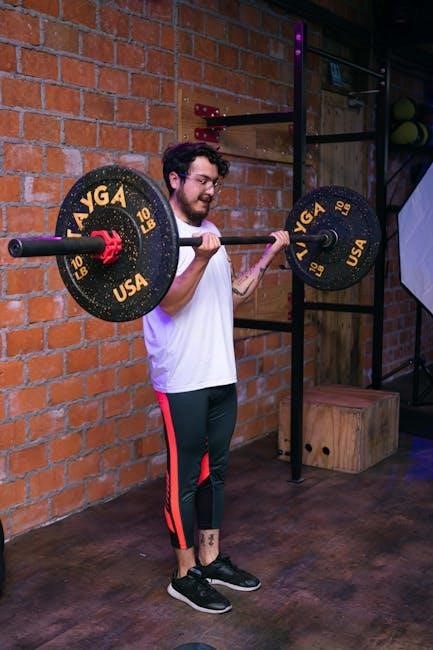
scapular strengthening exercises pdf
Strengthening the scapular muscles is vital for shoulder health, often aided by home exercise programs with heat before and ice after sessions.
These exercises, performed 3-4 times daily in sets of ten, enhance stability and control, crucial for rehabilitation and injury prevention.
Proper form and controlled movements are key, starting with minimal weight and adjusting as needed, ensuring pain-free execution of each exercise.
What is the Scapula and Why Strengthen It?
The scapula, or shoulder blade, is a foundational bone connecting the humerus to the clavicle, enabling a wide range of arm movements. Strengthening its stabilizing muscles is paramount for optimal shoulder function and preventing injuries.
Often overlooked, a weak scapula can contribute to rotator cuff issues, impingement, and postural imbalances. Targeted exercises, like scapular squeezes and rows, enhance control and stability.
A robust scapula provides a solid base for arm movements, distributing stress effectively and reducing strain on the shoulder joint. Consistent exercise, 3-4 times daily, builds endurance and prevents dysfunction. Proper form is essential to avoid pain and maximize benefits.
Prioritizing scapular health is a proactive step towards long-term shoulder wellness.
Importance for Shoulder Health
Maintaining optimal shoulder health hinges significantly on a strong and stable scapula. It acts as the central link in shoulder mechanics, influencing movement and force distribution. Weak scapular muscles compromise this foundation, leading to imbalances and increased injury risk.
Strengthening these muscles – through exercises like wall slides and prone raises – improves shoulder control and reduces stress on the rotator cuff. This is particularly crucial for conditions like rotator cuff injuries and impingement.
Consistent exercise, performed with proper form, enhances joint stability and promotes efficient movement patterns. Heat application before and ice after sessions can further aid recovery and minimize discomfort. A proactive approach to scapular health is key to long-term shoulder function.
Common Causes of Scapular Weakness
Scapular weakness often stems from prolonged poor posture, particularly rounded shoulders common with desk work or technology use. This leads to muscle imbalances, where chest muscles become dominant and scapular stabilizers weaken.
Lack of physical activity and sedentary lifestyles contribute significantly, as these muscles require regular stimulation to maintain strength. Injuries, such as rotator cuff tears or shoulder impingement, can also inhibit scapular function.
Furthermore, certain neurological conditions can impact muscle control. Addressing these underlying causes through targeted exercise programs – incorporating retraction and protraction movements – is vital. Consistent rehabilitation, potentially guided by a therapist, is key to restoring optimal scapular strength and stability.
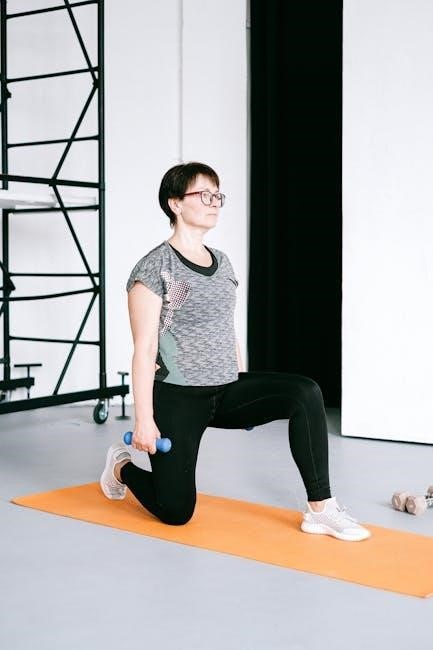
Warm-up Exercises for Scapular Activation
Scapular activation begins with gentle movements like scapular clocks, shoulder rolls, and arm circles, preparing muscles for more intense strengthening exercises.
Scapular Clock
Scapular Clock is a foundational warm-up exercise designed to improve scapular awareness and range of motion. Imagine your scapula (shoulder blade) as the hand of a clock.
Slowly and deliberately move your scapula through a full circular range, as if tracing the hours on a clock face. Focus on controlled movements, initiating the motion from the shoulder blade itself, not the arm.
Start with small circles and gradually increase the range of motion as you become more comfortable. Perform the exercise in both clockwise and counter-clockwise directions.
This helps to activate the muscles surrounding the scapula, preparing them for more demanding exercises. Maintain proper posture throughout, keeping your shoulders relaxed and down. Aim for 10-15 repetitions in each direction.
Shoulder Rolls
Shoulder rolls are a simple yet effective warm-up exercise to prepare the shoulder joint and surrounding muscles for activity. This movement promotes mobility and loosens tension in the upper back and shoulders.
Begin by sitting or standing with good posture, arms relaxed at your sides. Slowly roll your shoulders forward in a circular motion, focusing on a full range of motion. Repeat this movement 10-15 times.
Next, reverse the direction and roll your shoulders backward in a circular motion, again for 10-15 repetitions.
Concentrate on isolating the shoulder movement, avoiding excessive tension in the neck or upper trapezius. This exercise enhances blood flow and prepares the scapular muscles for more targeted strengthening work.
Arm Circles
Arm circles are a dynamic warm-up exercise that improves shoulder mobility and activates the scapular muscles. This prepares the shoulder complex for more strenuous strengthening activities, enhancing overall shoulder function.
Start by standing with feet shoulder-width apart and arms extended out to the sides at shoulder height. Make small circles with your arms, moving forward for 10-15 repetitions. Maintain a controlled pace and focus on smooth, circular movements.
Then, reverse the direction and perform 10-15 backward arm circles.
Gradually increase the size of the circles as your shoulder mobility improves. Avoid shrugging your shoulders during the exercise; keep them relaxed and down. This exercise is a great way to increase blood flow and prepare the shoulder for more intense work.
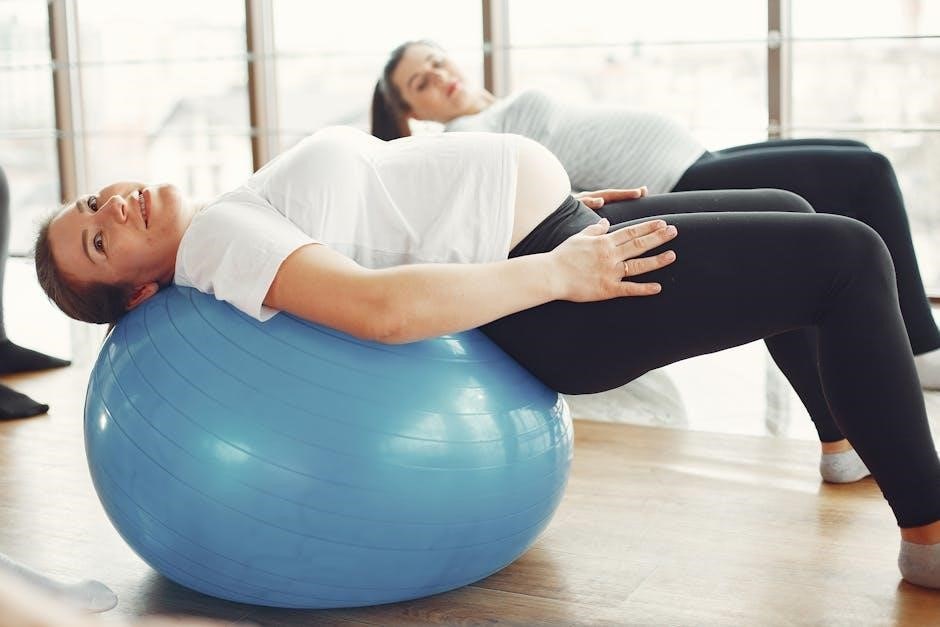
Core Scapular Strengthening Exercises
Exercises like scapular squeezes, wall slides, rows, and prone raises build foundational strength and stability, crucial for proper shoulder mechanics.
These movements focus on controlled scapular motion, enhancing muscle endurance and promoting balanced shoulder function during daily activities.
Scapular Squeezes (Retractions)
Scapular squeezes, or retractions, are a foundational exercise for strengthening the muscles that control scapular movement. To perform this exercise, sit or stand with good posture, shoulders relaxed. Gently squeeze your shoulder blades together, as if trying to hold a pencil between them.
Hold this contraction for a few seconds, focusing on feeling the muscles between your shoulder blades engage. Avoid shrugging your shoulders upwards during the movement; the focus should be solely on bringing the shoulder blades together.
Slowly release the squeeze, returning to the starting position. Repeat this exercise for three sets of ten to fifteen repetitions. Remember to perform the movements slowly and with control, avoiding any jerky motions. This exercise is beneficial for improving posture and stabilizing the shoulder joint.
Wall Slides
Wall slides are an excellent exercise for improving scapular upward rotation and overall shoulder mobility. Begin by standing with your back flat against a wall, feet slightly away from the wall. Bend your elbows to 90 degrees, with your upper arms and elbows also touching the wall.
Maintaining contact with the wall, slowly slide your arms upwards, keeping your elbows bent. Focus on initiating the movement with your scapulae, allowing them to move upwards along the wall. Avoid arching your back or lifting your shoulders.
Slide your arms as high as comfortably possible, then slowly return to the starting position. Perform three sets of ten to fifteen repetitions. This exercise helps strengthen the muscles responsible for scapular movement and improves shoulder range of motion.

Rows (with Resistance Band or Dumbbells)
Rows, performed with a resistance band or dumbbells, are fundamental for strengthening the muscles that retract and depress the scapula. Begin by securing a resistance band or holding dumbbells with a neutral grip. Maintain a good posture – a slight bend in the knees, a straight back, and engaged core.
Pull the band or dumbbells towards your torso, focusing on squeezing your shoulder blades together. Keep your elbows close to your body throughout the movement. Avoid using momentum; the exercise should be controlled.
Slowly return to the starting position, maintaining tension on the band or dumbbells. Perform three sets of ten to fifteen repetitions. Start with lighter resistance and gradually increase it as your strength improves. Proper form is crucial to avoid injury.
Prone Y, T, W Raises
Prone Y, T, W raises are excellent for targeting specific scapular muscles and improving overall shoulder stability. Lie face down on a bench or the floor with your arms extended. Begin with the ‘Y’ raise, lifting your arms overhead at a 45-degree angle, squeezing your shoulder blades together.
Next, perform the ‘T’ raise, extending your arms straight out to the sides, maintaining the scapular squeeze. Finally, execute the ‘W’ raise, bending your elbows at 90 degrees and lifting your arms, again focusing on shoulder blade retraction.
Complete three sets of ten to fifteen repetitions for each letter. Focus on slow, controlled movements and avoid arching your back. These exercises enhance scapular control and are beneficial for rehabilitation.

Advanced Scapular Exercises
Advanced exercises, like push-ups, pull-ups, and band work, build upon foundational strength. Proper form is crucial for maximizing benefits and preventing injury.
These movements demand greater scapular control and endurance, progressing rehabilitation and enhancing athletic performance through targeted muscle engagement.
Push-Ups (Focus on Scapular Movement)
Push-ups, when performed with a conscious focus on scapular movement, become a highly effective exercise for strengthening the muscles surrounding the shoulder blade. Instead of simply bending your elbows, prioritize allowing your shoulder blades to retract (squeeze together) as you lower your chest towards the floor.
Think about depressing your scapula – drawing them down and back – throughout the entire movement. As you push back up, protract your scapula, spreading them apart. This controlled scapular rhythm is more important than the depth of the push-up itself.
Beginners can modify this exercise by performing push-ups against a wall or on their knees. Maintain a straight line from head to heels (or knees) and focus on the scapular motion. Avoid any jerky movements; smoothness and control are paramount. Remember to discontinue if pain arises.
Pull-Ups/Chin-Ups (Assisted if Needed)
Pull-ups and chin-ups are excellent, yet challenging, exercises for developing significant scapular strength and control. The key is to initiate the movement with a deliberate scapular retraction and depression before bending your elbows. Imagine squeezing your shoulder blades together and down to start the pull.
This pre-activation engages the scapular stabilizers, ensuring they are working throughout the entire range of motion. Avoid simply “pulling” with your arms; focus on driving the movement from your upper back. If full pull-ups are too difficult, utilize assistance bands or an assisted pull-up machine.
Gradually reduce the assistance as your strength improves. Proper form is crucial – maintain a controlled descent and avoid swinging. Discontinue if you experience any shoulder pain, and prioritize scapular engagement over the number of repetitions.
Scapular Protraction and Retraction with Band
This exercise utilizes a resistance band to specifically target scapular movement, enhancing stability and control. Secure the band around a stable object at chest height. Grasp the band with both hands, maintaining a slight tension. Begin with your shoulders in a neutral position.
Initiate the movement by protracting your scapulae – rounding your upper back and reaching your shoulder blades forward, stretching the band; Then, slowly retract your scapulae – squeezing your shoulder blades together, pulling the band towards your body.
Focus on controlled movements throughout the entire range of motion. Avoid shrugging your shoulders; keep them down and back. Perform three sets of 15-20 repetitions, focusing on feeling the muscles between your shoulder blades working. Adjust band resistance as needed.
Serratus Punches
Serratus punches are a dynamic exercise designed to strengthen the serratus anterior muscle, crucial for scapular upward rotation and shoulder stability. Stand with feet shoulder-width apart, maintaining a slight bend in your knees. Extend your arms straight out in front of you at shoulder height, palms facing each other.
Without bending your elbows, protract your scapulae – reaching forward as if punching something, focusing on rounding your upper back and pushing your shoulder blades apart. Imagine actively reaching around your ribcage with your shoulder blades.
Maintain a controlled movement, avoiding any shrugging or upward elevation of the shoulders. Perform three sets of 15-20 repetitions, concentrating on the feeling of your serratus anterior engaging. This exercise improves scapular control and overall shoulder function.

Exercises Using Equipment
Therabands, dumbbells, physioballs, and cable rows offer varied resistance for scapular stabilization and strength, enhancing control and promoting rehabilitation.
Utilizing these tools allows for progressive overload, targeting specific scapular muscles and improving overall shoulder mechanics effectively.
Theraband Exercises for Scapular Stabilization
Theraband exercises are excellent for initiating scapular stabilization due to their adjustable resistance and portability. Begin with external rotation, attaching the band at waist level to a stable object like a doorknob or post.
Stand sideways, maintaining a slight bend in your knees and keeping your feet shoulder-width apart. Grasp the band and pull it taut, focusing on rotating your arm outward while keeping your elbow tucked in.
Perform controlled repetitions, ensuring a smooth motion. Other beneficial exercises include scapular retractions – pulling your shoulder blades together against the band’s resistance – and protractions, pushing them apart.
Remember to maintain proper posture throughout each exercise, and gradually increase the band’s resistance as your strength improves. These exercises are foundational for building a stable scapular base.
Dumbbell Exercises for Scapular Strength
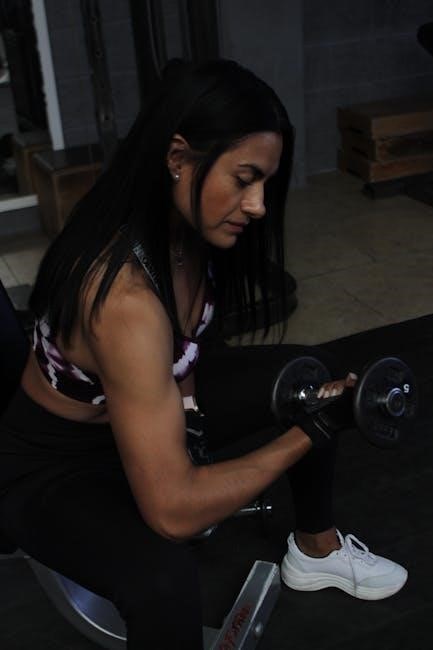
Dumbbell exercises provide a progressive overload for scapular strengthening, building upon the foundation established with theraband work; Begin with light weights – even a small soup can can be effective initially – and prioritize form over load.
Prone Y, T, and W raises are excellent choices. Lie face down on a bench or the floor, and lift the dumbbells in the shapes of these letters, focusing on squeezing your shoulder blades together during the movement.
Rows are also highly effective; bend at the hips, keeping your back straight, and pull the dumbbells towards your chest, again emphasizing scapular retraction.
If exercises become too difficult, reduce the weight. Controlled movements are paramount; avoid jerky motions to prevent injury and maximize muscle engagement. Gradually increase the weight as strength improves.
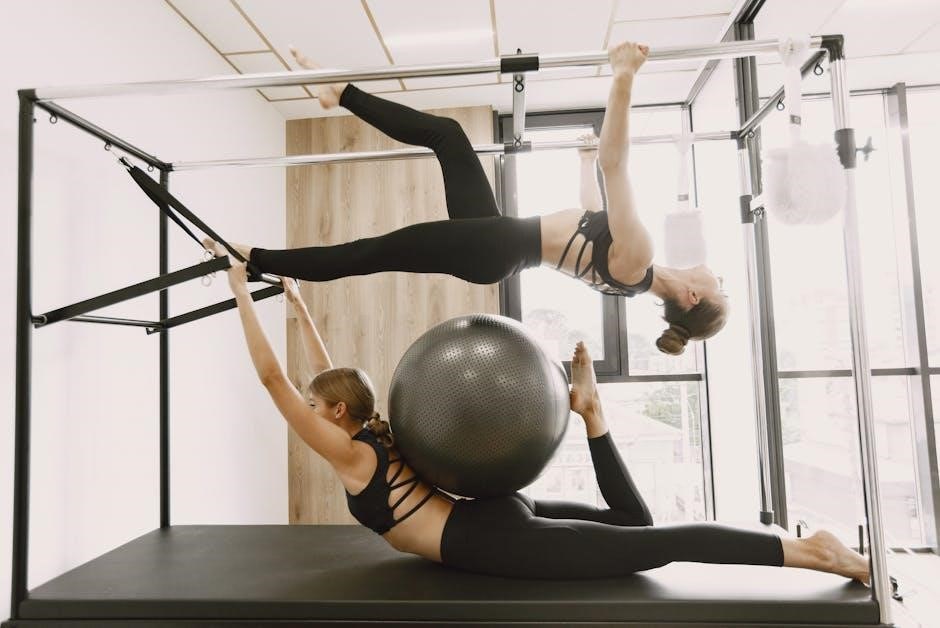
Physioball Scapular Exercises ౼ Rolling
Physioball exercises offer a dynamic challenge to scapular stability, engaging core muscles alongside the scapular stabilizers. A key exercise involves rolling the hands up and down a physioball against a wall.
Maintain proper shoulder positioning – shoulders drawn back and down – throughout the movement. This ensures the focus remains on scapular control rather than relying on momentum. The exercise targets the serratus anterior, crucial for scapular protraction.
Perform three sets of 15 repetitions, concentrating on smooth, controlled motions.
This exercise enhances scapular awareness and improves the ability to maintain optimal shoulder mechanics. It’s a valuable addition to a comprehensive scapular strengthening program, promoting functional movement patterns.
Cable Rows for Scapular Control
Cable rows are excellent for developing scapular control and strengthening the muscles responsible for retraction and depression. This exercise emphasizes the coordinated movement of the shoulder blade during pulling motions.
Focus on initiating the row by squeezing the scapulae together before bending the elbows. This ensures the scapular muscles are actively engaged throughout the exercise, rather than relying solely on arm strength.
Maintain a stable core and avoid rounding the upper back. Perform three sets of 10-12 repetitions, gradually increasing the resistance as strength improves.
Cable rows promote proper posture and enhance shoulder stability, making them a valuable component of any scapular strengthening program, particularly for those recovering from injury.
Scapular Stabilization for Specific Conditions
Scapular exercises address rotator cuff injuries, impingement, postural issues, and periarthritis, utilizing stabilization training for targeted rehabilitation and pain reduction.
Programs often involve 30-minute daily sessions for six weeks, focusing on correcting scapular dyskinesis and restoring optimal shoulder function.
Scapular Exercises for Rotator Cuff Injuries
Rotator cuff injuries often benefit significantly from targeted scapular stabilization exercises. These aren’t about directly strengthening the torn muscle initially, but rather creating a stable base from which the cuff can function optimally.
External rotation exercises, utilizing a theraband anchored at waist level, are frequently prescribed. Maintaining proper posture – feet shoulder-width apart, knees slightly bent – is crucial during execution. The focus is on controlled movement, avoiding jerky motions.
Strengthening the muscles that control scapular movement (serratus anterior, rhomboids, trapezius) helps to depress, retract, and upwardly rotate the scapula, improving shoulder mechanics and reducing stress on the injured rotator cuff. This approach supports healing and prevents re-injury.
Remember to start slowly and listen to your body, discontinuing any exercise that causes pain.
Scapular Exercises for Shoulder Impingement
Shoulder impingement often arises from poor scapular mechanics, leading to compression of tendons and bursae. Strengthening exercises aim to restore proper movement patterns and create more space within the shoulder joint.
Focusing on exercises that promote scapular retraction and downward rotation is key. Wall slides, for example, encourage proper scapular positioning during arm elevation, reducing the risk of impingement. Rows, performed with resistance bands or dumbbells, strengthen the muscles responsible for retracting the scapula.
Maintaining controlled movements and avoiding excessive forward shoulder posture are vital. These exercises should be pain-free; if pain occurs, modify or discontinue the exercise. A progressive approach, starting with lighter resistance, is recommended.
Consistent execution of these exercises can alleviate symptoms and improve shoulder function.
Scapular Exercises for Postural Correction
Poor posture, often characterized by rounded shoulders and a forward head, frequently stems from weak scapular stabilizing muscles. Targeted exercises can counteract these imbalances and restore a more upright posture.
Scapular squeezes, or retractions, are fundamental for strengthening the muscles that pull the shoulder blades back. Wall slides, performed with the back flat against a wall, reinforce proper scapular positioning. Rows, utilizing resistance bands or dumbbells, further enhance scapular retraction strength.
Prone Y, T, and W raises engage the lower trapezius and serratus anterior, crucial for downward rotation and preventing winging. Consistent practice of these exercises helps to realign the shoulders and improve overall postural alignment.
Remember to maintain proper form and avoid compensating with other muscle groups.
Scapular Exercises for Periarthritis of the Shoulder
Periarthritis of the shoulder, an inflammatory condition, benefits significantly from scapular stabilization exercise training. A recent study focuses on comparing scapular exercises based on dyskinesis type versus traditional rehabilitation, both conducted for 30 minutes daily over six weeks.
Exercises like scapular squeezes and rows help restore normal scapular movement patterns, reducing pain and improving function. External rotation exercises with a theraband strengthen rotator cuff muscles, supporting shoulder stability.
Focusing on controlled movements and avoiding pain exacerbation is crucial. Gradual progression, starting with light resistance, is recommended. The goal is to improve scapular control and reduce inflammation, ultimately enhancing shoulder range of motion and alleviating discomfort.
Consistent adherence to the program is key for optimal results.
Creating a Scapular Strengthening Program
A successful program involves 3-4 sessions daily, with three sets of ten repetitions, prioritizing proper form and gradual progression to avoid injury.
Start slowly, monitor pain, and adjust resistance accordingly, ensuring controlled movements throughout each exercise for optimal results.
Frequency and Sets/Reps
Establishing a consistent frequency is paramount for reaping the benefits of scapular strengthening. Based on recommendations from rehabilitation programs, performing these exercises three to four times daily is generally advised. This consistent approach helps reinforce proper muscle activation and promotes lasting improvements in scapular control.
Regarding sets and repetitions, a practical guideline is to complete three sets of ten repetitions for each exercise. This volume provides sufficient stimulus for muscle adaptation without being overly taxing, especially when initiating a new program.
However, individual needs may vary. Listen to your body and adjust the number of sets or repetitions based on your tolerance and progress. Remember, quality of movement trumps quantity; prioritize proper form over completing a high number of reps with compromised technique.
Progression of Exercises
Gradual progression is essential to avoid overexertion and maximize the effectiveness of your scapular strengthening program. Begin with foundational exercises, focusing on mastering proper form before adding resistance or complexity. Initially, bodyweight exercises like scapular squeezes and wall slides are excellent starting points.
As strength improves, incrementally increase the challenge. This can involve adding resistance bands, light dumbbells (even soup cans!), or progressing to more demanding movements like rows and push-ups.
Monitor your body’s response and only advance when you can perform the current exercise with good form and without pain. Remember, small, consistent steps forward are more sustainable than attempting too much too soon. Prioritize controlled movements throughout the progression.
Importance of Proper Form
Maintaining correct form during scapular exercises is paramount to prevent injury and ensure optimal muscle activation. Avoid jerky or rushed movements; instead, focus on slow, controlled execution throughout each repetition. Improper form can shift the stress to other joints, potentially leading to pain or exacerbating existing conditions.
Pay close attention to shoulder positioning – keep them back and down – and engage your core to stabilize your spine. If you experience any discomfort, immediately stop the exercise and reassess your technique.
Consider seeking guidance from a physical therapist or qualified trainer to learn proper form initially. Prioritizing quality over quantity will yield far better long-term results.
Cool-down and Stretching
Post-exercise recovery involves scapular and shoulder stretches to improve flexibility and reduce muscle soreness, often complemented by applying ice afterwards.
Gentle stretching enhances range of motion and promotes relaxation, aiding in the overall healing and strengthening process.
Scapular Stretches
Following scapular strengthening exercises, incorporating dedicated stretches is crucial for maintaining flexibility and preventing muscle imbalances. One effective stretch involves reaching arms across the body, gently pulling the shoulder towards the opposite side, feeling a stretch between the shoulder blades.
Another beneficial stretch is the doorway stretch, placing forearms on a doorframe and leaning forward to open the chest and stretch the anterior shoulder muscles. These stretches should be held for 20-30 seconds, repeated 2-3 times each.
Remember to breathe deeply throughout each stretch, avoiding any bouncing or jerky movements. Consistent stretching complements strengthening, promoting optimal shoulder function and reducing the risk of injury. Prioritize controlled, gentle movements to maximize benefits.
Shoulder Stretches
Complementing scapular stretches, shoulder stretches are essential for comprehensive post-exercise recovery and improved range of motion. A simple cross-body shoulder stretch involves bringing one arm across the chest and gently pulling it closer with the opposite hand, feeling a stretch in the rear shoulder.
Another effective stretch is the overhead triceps stretch, reaching one arm overhead and bending at the elbow, then gently pulling the elbow towards the head with the opposite hand. Hold each stretch for 20-30 seconds, repeating 2-3 times per side.
Focus on maintaining relaxed shoulders and deep breathing throughout. These stretches, alongside scapular work, contribute to balanced muscle development and prevent stiffness, enhancing overall shoulder health and functionality.
Post-Exercise Recovery
Effective post-exercise recovery is paramount after scapular strengthening, minimizing soreness and optimizing muscle repair. Applying ice to the shoulder area for 15-20 minutes post-workout can reduce inflammation and alleviate discomfort, as recommended by Dr. Chalmers for home exercise programs.
Gentle stretching, including scapular and shoulder stretches, improves flexibility and prevents stiffness. Hydration is also crucial; replenishing fluids supports muscle function and recovery.
Prioritize adequate sleep to allow the body to fully repair and rebuild muscle tissue. Listen to your body, and avoid overtraining. Consistent, mindful recovery practices are integral to long-term progress and injury prevention.